
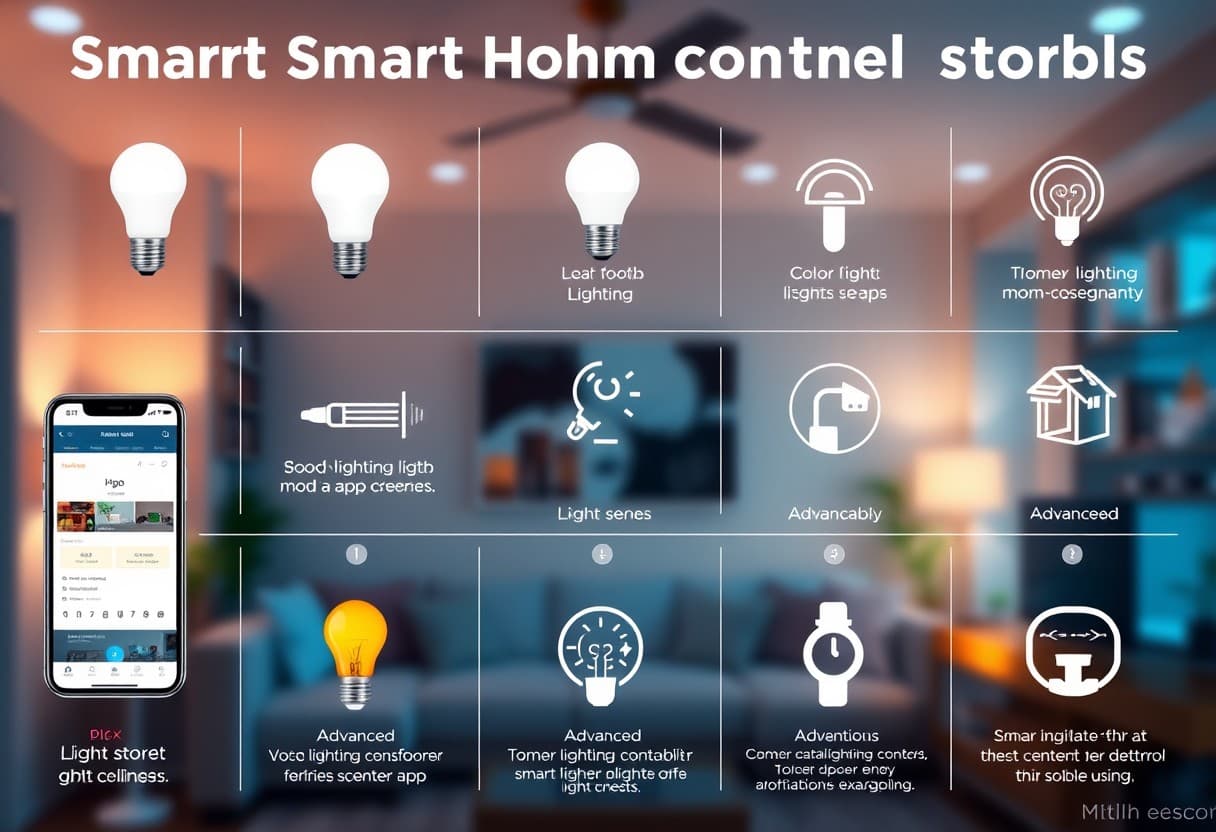
"Smart lighting" covers everything from a bulb you switch from your phone to a whole-home system that responds to your alarm. The levels are genuinely different, and picking the wrong one is how people end up with a drawer of apps and a house that still needs a light switch hunted for in the dark.
Here is each level, what it is good for, and when to move up.
Level 1 — Remote control
The entry point: smart bulbs or plugs you switch from an app or a voice assistant.
Good for: a lamp or two, renters, trying the idea out cheaply.
Limitation: a smart bulb on a normal wall switch fails the moment someone flips that switch off. The bulb loses power, drops off the network, and the app stops working. This single problem causes more "smart lighting is annoying" complaints than everything else combined.
Level 2 — Smart switches instead of smart bulbs
Replace the switch rather than the bulb, and the wall control keeps working normally for everyone in the house while the automation runs behind it.
Good for: any room used by people who did not install the system — guests, kids, family.
Rule of thumb: bulbs for lamps, switches for anything wired into the wall.
Level 3 — Scheduling
Lights that follow time, and ideally sunrise and sunset rather than the clock, so they track the seasons without adjustment.
Good for: exterior lighting, occupancy patterns while away, ending the "porch light on all morning" problem.
Do: add a little randomisation to away schedules. A house that lights up at exactly 7:00 every night reads as a timer.
Level 4 — Sensors and triggers
Lighting that reacts: motion, occupancy, ambient light level, door contacts.
Good for: garages, hallways, closets, stairs, and any exterior approach where light should arrive before a person does.
Watch: occupancy sensors need a sensible timeout, or you get lights switching off on someone sitting still.
Level 5 — Scenes and whole-home control
One instruction moving many lights at once: Evening, Away, Goodnight, Movie.
Good for: making the system usable by everyone. Scenes are what turn a collection of automated fixtures into something the household actually uses.
Level 6 — Integrated with security
The top level, and the one most homes never reach: lighting that participates in security events. Alarm triggers and every exterior light goes to full. Arming in Away mode starts the occupancy pattern. A night-time door event lights a path.
Good for: any home where the lighting and the alarm should be one system rather than two that happen to share a building.
Choosing your level
Start where the annoyance is. If lights get left on, you want Level 4. If the house looks empty when you travel, Level 3. If nobody but you can operate it, Level 2 and 5. If you already have an alarm, Level 6 is usually the cheapest meaningful security upgrade available, because the fixtures are already there.
Want help deciding? Book a free consultation and we will look at your home, not a catalogue.
More from the blog
The Ultimate List Of Top Security Cameras For Your Smart Home
A rundown of the best smart-home security cameras available today, compared on video quality, night vision, smart integration, and overall value for protecting your home.
Future-Proof Your Home — 5 Smart Home Trends You Can't Ignore
Five trends shaping how homes will be wired, automated and secured over the next decade — and what homeowners should do today to stay ahead.
Choosing The Right Smart Home Lighting For Safety And Style
Smart lighting does more than set a mood — the right setup can deter intruders, automate safe paths through your home, and tie into your alarm system.
Protect what matters most.
Book a virtual consult and we'll design a system around your home.
Book a Consult